
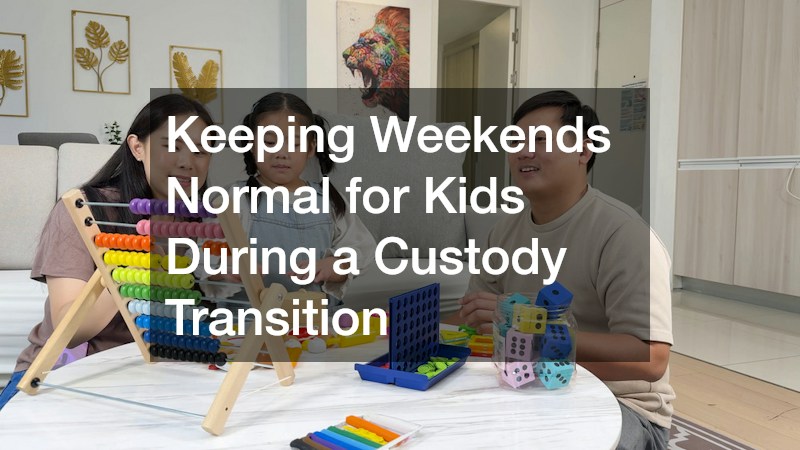
When parents separate, weekends often become the biggest adjustment for kids, since they are the time most shaped by custody schedules. A little structure and intention can help weekends still feel like weekends, full of comfort, fun, and predictability, rather than a tense handoff between two households. This guide offers practical ways to protect your child’s sense of normalcy while you both adjust to a new routine.
Keep Familiar Weekend Routines Intact
Kids find comfort in repetition, especially during a custody transition when so much else feels uncertain. If Saturday morning pancakes or Sunday night movie nights were part of your family’s rhythm, try to preserve them in some form at both homes. Consistency doesn’t mean duplicating every detail, but keeping the spirit of familiar traditions alive reassures kids that their world hasn’t completely fallen apart.
Talk with your co-parent about which routines matter most to your child and agree on which ones each household will maintain. This reduces the whiplash kids feel moving between two different environments every week.
- Keep regular wake-up and bedtime routines as close to normal as possible
- Maintain weekend activities like sports practice, religious services, or family visits
- Preserve small rituals, such as a favorite breakfast or weekly phone call with a grandparent
- Avoid introducing too many new rules or expectations during transition weekends
Plan Low Pressure Family Activities

It’s tempting to fill custody weekends with big outings to make up for lost time, but kids often benefit more from low key, predictable fun. Simple activities like board games, bike rides, or baking together can feel more stabilizing than elaborate plans. Overscheduling can actually add stress, especially if your child is already adjusting to a new living arrangement.
When you do want to make a weekend special, consider involving your child in the decision. Letting them pick the activity, even something small, gives them a sense of control during a time when so many decisions are being made for them.
- Choose activities your child already enjoys rather than new, untested experiences
- Save major outings for times when your child seems emotionally settled
- Ask your child for input so they feel included, not just shuffled around
- Build in downtime so the weekend doesn’t feel rushed or performative
Make Mealtimes Feel Normal Again
Shared meals are one of the easiest ways to rebuild a sense of togetherness after a custody change. Cooking a familiar family recipe or setting the table the way you always did can anchor a weekend in comfort rather than disruption. If cooking feels like too much some weekends, trying one of the best restaurants in your area for a relaxed family dinner can also create a positive, low stress memory.
The goal isn’t to recreate every tradition perfectly, but to give your child moments where things feel familiar and unforced. Even a quick weekend breakfast out can become a new tradition that your child looks forward to at your home specifically.
- Keep favorite recipes or meal traditions alive when possible
- Involve kids in meal planning or cooking to give them a sense of participation
- Use outings to new restaurants sparingly, as a treat rather than a weekly obligation
- Avoid turning mealtimes into a venue for discussing custody logistics
Communicate Clearly About the Schedule
Uncertainty about where they’ll be and when is one of the biggest sources of anxiety for kids during a custody transition. A simple visual calendar, even a printed one on the fridge, can help children feel more in control of their week. Clear communication between parents about pickup times, handoffs, and any schedule changes also reduces the chance of conflict happening in front of the kids.
If scheduling disputes become frequent or difficult to resolve on your own, it may be worth consulting a divorce attorney to formalize a parenting plan that reduces ambiguity. Having clear legal guidelines can actually make weekends feel calmer for kids, since both parents are working from the same expectations rather than negotiating details in the moment.
- Use a shared calendar app or printed schedule that both parents and kids can reference
- Confirm handoff times and locations a few days in advance
- Keep transitions brief and low conflict, ideally out of earshot of the children
- Revisit the schedule periodically as kids grow and activities change
Support Your Child’s Emotional Adjustment
Even when logistics run smoothly, kids may still feel sad, confused, or anxious about moving between two homes. These feelings don’t always show up as tears or complaints—sometimes they look like irritability, trouble sleeping, clinginess, or sudden disinterest in activities they used to enjoy. Give your child space to express those feelings without rushing to fix everything or minimize what they’re experiencing. Simple check-ins, like asking how they’re feeling about the new routine, can open the door to honest conversation. Timing matters here: a casual question during a car ride or while making dinner often works better than a formal sit-down talk, since kids tend to open up more when they don’t feel put on the spot. Pay attention to age-appropriate cues, too. A five-year-old might act out this transition through play or regress in behaviors like bedwetting, while a ten-year-old might withdraw or get quiet. Naming emotions for younger kids (“It sounds like you’re feeling nervous about the switch”) and simply listening for older ones can both go a long way. If sadness or anxiety seems to linger for more than a few weeks, or starts interfering with school, friendships, or sleep, it may help to loop in a school counselor or family therapist who specializes in custody transitions. Normalizing that extra support doesn’t mean something has gone wrong—it just means your child has an outlet to process a big change.
It also helps to normalize that it’s okay to miss the other parent or feel mixed emotions over a weekend. Kids often worry that missing one parent means they’re being disloyal to the other, so saying something simple like “It’s okay to miss Dad while you’re here with me” can relieve a lot of unspoken guilt. Watch for signs that a child is struggling but not saying so directly, like irritability, trouble sleeping, clinginess, or acting out shortly before or after a transition. These behaviors are common during the first few months of a new custody arrangement and usually fade as routines become more predictable. Reassure your child that these feelings are temporary and that both parents still love and support them, even if the living situation has changed. Keep the message consistent no matter which household they’re in, since contradicting reassurances from each parent can leave kids feeling confused about who to believe. If sadness, anxiety, or behavioral changes persist for more than a few weeks or seem to intensify, it may be worth checking in with a school counselor or child therapist who has experience with family transitions.
- Validate feelings instead of dismissing or rushing past them — try “It’s okay to feel sad about the schedule change” rather than “You’ll be fine”
- Watch for stress signals like changes in sleep, appetite, or behavior, including clinginess, irritability, or withdrawal from friends
- Keep communication open with your co-parent about any concerns your child shares, so patterns don’t go unnoticed across both homes
- Expect an adjustment period of several weeks to a couple of months; occasional bad days are normal and don’t necessarily signal a deeper problem
- Consider a child therapist if adjustment struggles persist beyond a few months or worsen over time
- Ask your pediatrician or school counselor for referrals if you’re unsure where to start looking for support
Weekends don’t have to lose their warmth just because a custody schedule has changed. By keeping routines familiar, planning low pressure activities, and communicating clearly, you can help your child feel secure in both homes. Start with one or two small adjustments this weekend, and build from there as your family finds its new normal.
